
19 February 2026
Is Bali Still A Good Investment In 2026?
Is Bali still a good investment in 2026? With 15%+ rental yields and a booming economy, the answer is yes. Here are the strategies top investors are using.
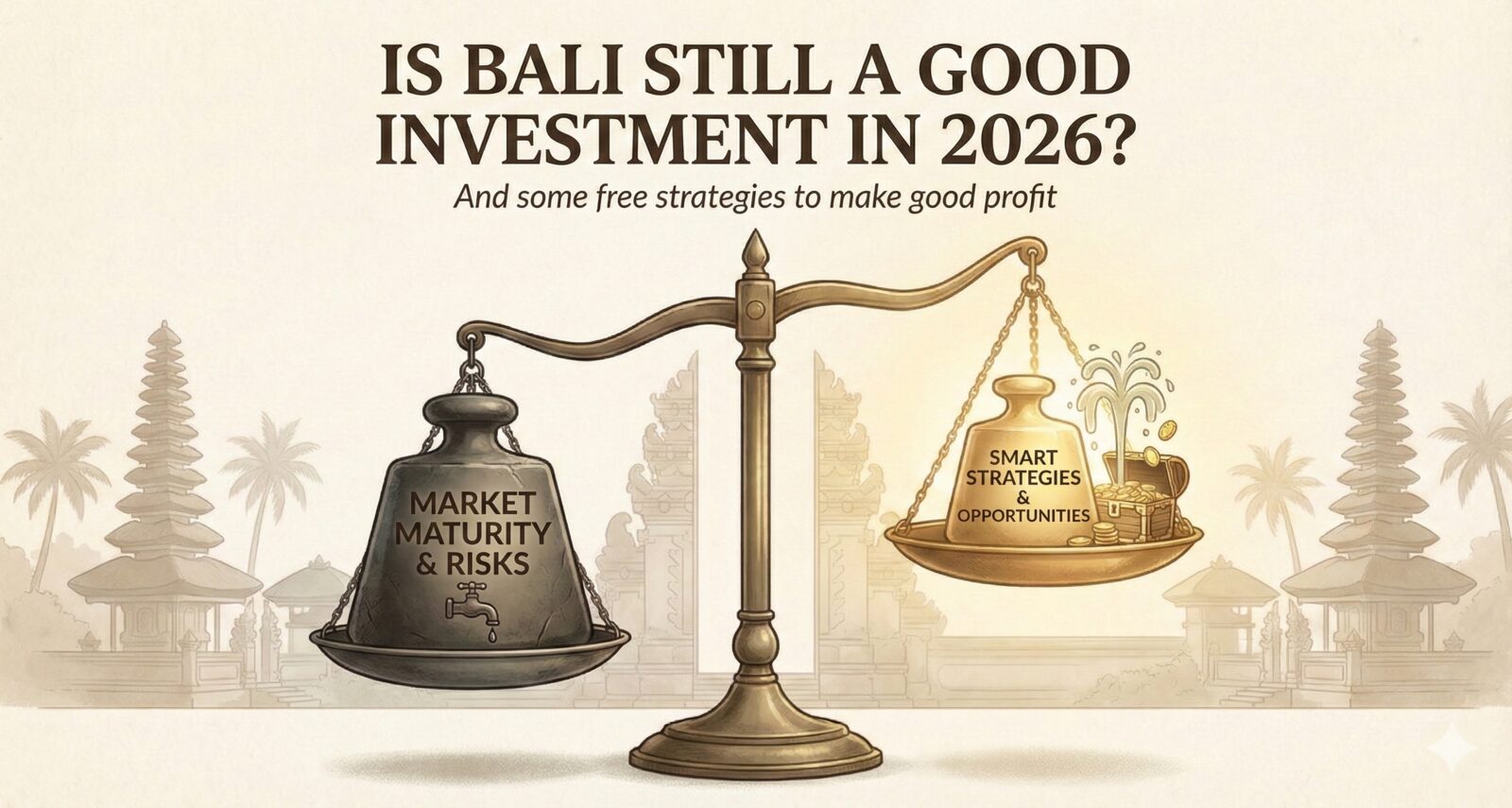
If you are looking at the global real estate market right now, you are probably asking yourself one major question: Is Bali still a good investment, or have I missed the boat? The short answer is yes, Bali is still a phenomenal investment. The rules of the game have evolved. The days of throwing money at any random patch of land and hoping for a quick buck are over. Today, the Bali property market is a mature, highly lucrative landscape that rewards strategic, data-driven investors. At Ayla Property, we’ve watched this island transform from a seasonal holiday destination into a global real estate powerhouse. Here is exactly why Bali real estate should still be at the top of your portfolio, and the exact strategies savvy investors are using to generate massive returns.
Key Takeaways
- ✓Yes — but the rules have evolved: Random land purchases are gone. Today the market rewards strategic, data-driven investors with 15%+ rental yields in the right areas.
- ✓Indonesia is becoming an economic powerhouse: On track to be the world's 4th largest economy. Foreign capital is rotating out of volatile Western markets into Southeast Asia.
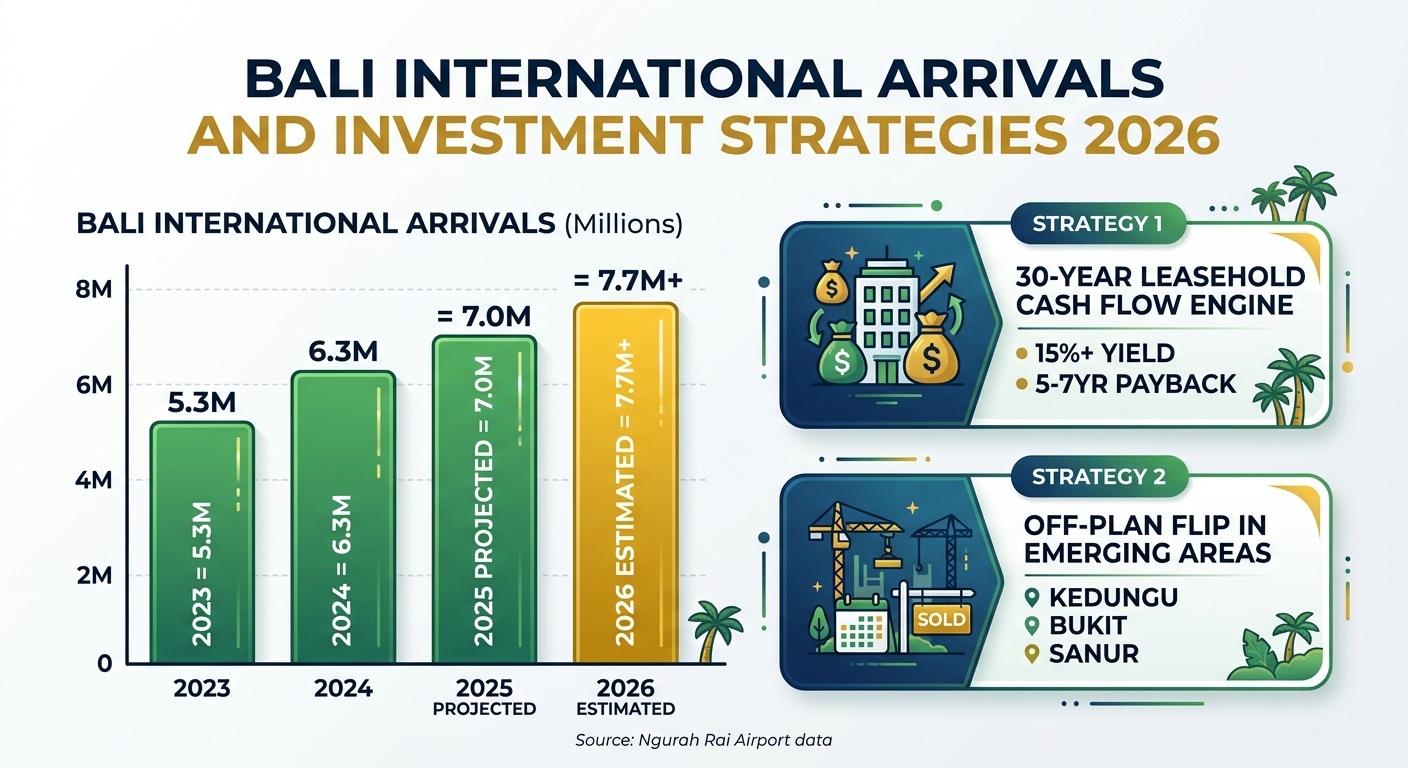
- ✓Tourism is a structural tailwind: Arrivals grew from 5.3M (2023) to 6.3M (2024), with 7M+ projected. The visitor profile has shifted to high-spend, long-stay digital nomads — not package tourists.
- ✓The Digital Nomad Visa is a rental engine: Remote workers living 12-month stints generate $2,000–$5,000/month in long-term rental income with lower turnover and better yields.
- ✓Two proven strategies: The 30-year leasehold cash-flow engine (15%+ yield, capital recouped in 5–7 years) or the off-plan flip in emerging areas (Kedungu, Bukit, Sanur).
The Macro Picture: Why Indonesia is an Economic Juggernaut
Before looking at a single villa, you have to look at the country backing it. Indonesia is no longer just a developing nation; it is a global economic anchor.
- A Safe Haven Amidst Global Turmoil: With ongoing geopolitical tensions and war uncertainty involving Russia, Ukraine, and other regions, global capital is seeking safe, alternative havens. Investors are actively shifting their funds away from volatile European and Western markets into Southeast Asia. Indonesia, with its neutral political stance and booming domestic market, is thriving as a premier alternative investment destination.
- The 4th Largest Economy in the World: Indonesia is rising through the global ranks at an unprecedented pace. Economic projections indicate that Indonesia is on track to become the 4th largest economy in the world within the next 7 years. This explosive GDP growth is fueled by massive infrastructure investments, foreign direct investment, and a massive, young, and highly productive population.
- Unstoppable Popularity: Bali’s popularity continues to grow year over year. The island has successfully transitioned from a standard tourist hotspot into a major hub for digital nomads, expats, and high-net-worth lifestyle buyers. The demand for long-term rentals and luxury short-term stays is structural and here to stay.
Strategy 1: The Cash-Flow Engine (The 30-Year Leasehold Play)
For foreign investors, the leasehold model is the absolute sweet spot for maximising Return on Investment (ROI) without the legal hurdles of freehold ownership. If executed correctly, a leasehold property actually defies normal depreciation. The Playbook:
- Acquire Long-Term: Buy a premium villa with a 30-year (or more) leasehold in a high-demand area.
- Cash Flow It: Put the property on the short-term or yearly rental market. Bali’s rental yields are incredibly strong, consistently achieving 15%+ annually when professionally managed.
- Recoup Your Capital: Let rental income pay off your initial investment within 5 to 7 years.
- Sell the Business: Here is the secret: when you sell a leasehold villa with a proven, profitable rental history, you aren’t just selling the remaining 23 years on a lease; you are selling a turnkey, cash-flowing business. You can then sell the property for maximum profit, walking away with both your rental gains and a massive lump sum.
Strategy 2: The Capital Appreciation Engine (The Off-Plan Flip)
If you are looking for aggressive capital growth rather than passive income, the off-plan flipping strategy in Bali’s emerging micro-markets is unmatched. While established areas like Canggu and Seminyak offer stability, the massive capital appreciation opportunities have moved to high-growth zones:
- Kedungu: The next frontier of the West Coast. It offers the lush, peaceful rice-field charm that Canggu had 10 years ago, but with modern infrastructure quickly catching up.
- The Bukit (Uluwatu & Bingin): The luxury capital of Bali. High-end cliffside developments and dramatic ocean views command premium prices, and land scarcity is driving valuations skyward.
- Sanur: Traditionally a sleepy family destination, Sanur is undergoing a massive revitalisation. With the new international hospital and harbour upgrades, it has become a highly sought-after defensive investment zone with immense upside.
The Playbook:
- Buy Off-Plan: Secure an unbuilt villa at a heavily discounted pre-construction price in Kedungu, the Bukit, or Sanur.
- Wait for Completion: Let the developer build it over the next 10–14 months. As the build progresses and the surrounding area develops, the property’s market value naturally inflates.
- Flip It: Sell the brand-new, ready-to-move-in villa at the current, much higher market rate.
- Rinse and Repeat: Take your initial capital plus the profit, and roll it into an even bigger off-plan project. Compound your wealth with every cycle.
The Tourism Numbers Don’t Lie
Bali welcomed over 5.3 million international visitors in 2023, recovering strongly post-pandemic. By the end of 2024 that figure had climbed past 6.3 million, and 2025 projections exceeded 7 million. These aren’t tourist-board estimates. These are immigration data from Ngurah Rai International Airport.
What matters for property investors is not just the volume but the composition. The visitor mix has shifted materially since 2019. Pre-pandemic, Bali was dominated by Australian and Chinese package tourists. Today, the visitor profile is far more diverse: European, American, Middle Eastern, and Indian travellers, many of whom are high-spending and drawn by Bali’s digital nomad reputation rather than just beach tourism.
This matters because high-spending, longer-stay visitors generate stronger villa rental income than short-burst package tourists. Average daily villa rates in Canggu and Uluwatu have increased by 25–35% since 2021, even as supply has grown. That is a demand-led price increase, not developer inflation.
The Visa Tailwind
Indonesia introduced the Digital Nomad Visa in 2023, allowing remote workers and freelancers to live in Indonesia for up to five years without paying Indonesian income tax on foreign-sourced income. This was a deliberate policy move to attract long-stay, high-spending visitors.
The effect on Bali’s rental market has been significant. The pool of people willing to pay $2,000–$5,000 per month for a well-managed villa in Canggu or Uluwatu has expanded dramatically. Monthly and quarterly rental bookings, which generate better yields and lower turnover costs than nightly Airbnb stays, have surged.
For investors, this is a structural tailwind. Every person who arrives on a Digital Nomad Visa is a potential long-term rental customer. And Indonesia continues to expand and refine its visa offering, with the E35B retirement visa and the Golden Visa programme attracting older, wealthier buyers with a direct interest in property ownership.
The Risks (And Why They’re Manageable)
No honest investment guide leaves out the risk section. Bali property investment does carry risks, but they are largely manageable with the right approach.
Legal risk: Buying through the wrong structure, using nominee arrangements, or skipping due diligence can result in title disputes or unenforceable agreements. This is the most common way investors lose money in Bali. The fix is straightforward: use an independent notary, verify title and zoning, and work with an agent who has legal accountability.
Developer risk: Off-plan purchases carry construction and delivery risk. Developers occasionally face delays or, in rare cases, financial difficulties. Mitigate this by verifying the developer’s track record, checking company financials, and structuring staged payments that only release funds against verified milestones.
Market saturation in specific areas: Canggu in particular has seen rapid supply growth. Poorly located or under-managed villas are increasingly competing on price. Well-located, professionally managed properties are not affected. The days of any villa generating strong yields regardless of quality are fading.
Currency exposure: The IDR can weaken. Rental income is USD-denominated, which reduces this risk significantly, but repatriation at unfavourable exchange rates remains a consideration for some investors.
None of these risks are unique to Bali. Every market has them. What distinguishes Bali is that the rewards, 15%+ yields, strong capital appreciation, low entry costs, and a genuinely thriving tourism economy, remain compelling enough to justify the risks when managed properly.
A Note on Timing
A common question we hear is: “Have I missed the window?”
The honest answer is that the window for buying any property in Bali at 2018 prices has passed. But that is true of every market that performs well: early buyers got in cheaper.
What matters is whether today’s entry price still generates a return that justifies the investment. At 15%+ gross yields, strong capital appreciation trajectories in emerging areas, and a tourism economy that is structurally growing, the answer is yes. Today’s prices still work. You can test that claim against your own budget with our free Bali ROI calculator.
The investors who are asking “have I missed it?” will ask the same question in three years, looking back at today’s prices wishing they had moved. The ones who act now are the ones those future investors will envy.
Is Bali still a good investment? Absolutely.Is Bali still a good investment? Absolutely. Between Indonesia’s meteoric economic rise, the influx of global capital seeking a haven, and the highly lucrative leasehold and off-plan strategies, the market is ripe for the taking. The “wild west” days might be over, but the era of calculated, high-yield wealth building has just begun.
Want to go deeper? Explore our area-specific investment guides for buying property in Canggu and investing in Uluwatu, or read our complete guide to buying property in Bali as a foreigner.
Considering investing in Bali? Let's talk. Book a no-obligation call.